







WE BUILD BRANDS THEY LOVE
Divina Anomalia is an independent boutique creative agency that crafts fruitful designs that bring your brand to life, magnetizing success and ideal clients.
Whether you're launching a new venture or seeking a brand rebirth, let us elevate your business to new heights.

From logos, AI photoshoots, web design, or complete brand overhauls, Divina Anomalina will nurture your growth and propel you to the next level.

Brand Designs
We craft magnetic brand identities that instantly connect and convert:
Mood boards & creative direction
Color palettes & typography
Logo design & digital brand assets
Brand voice & messaging

Content Creation
We produce strategic content that attracts attention and builds lasting presence:
SEO articles
AI commercials
Social media content
Ad design
AI photoshoots

Web Design
We design refined, high-performing websites that elevate and convert:
Custom website design
UX & user flow
Mobile optimization
Conversion-focused layouts
Brand-aligned digital experience
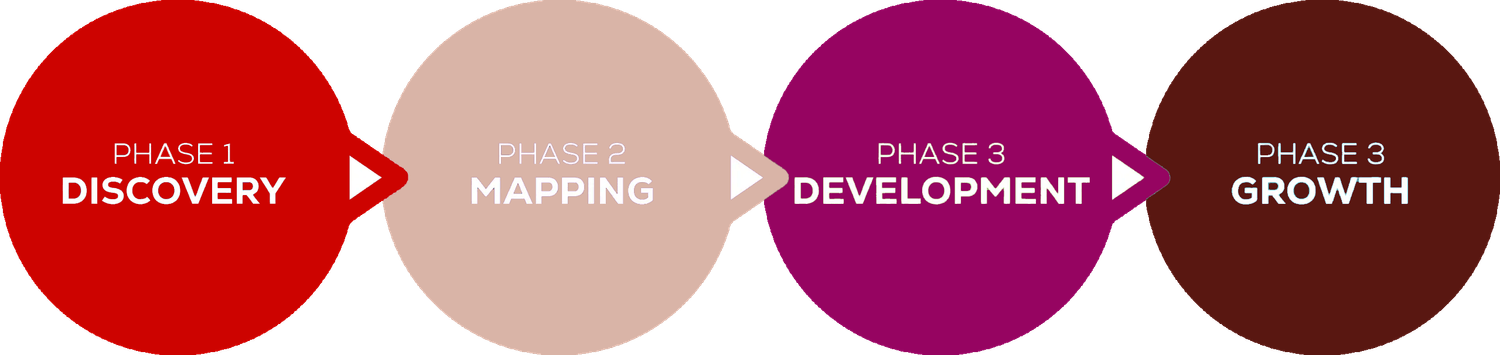
Every phase has purpose.
Each step builds momentum—creating a brand that’s not only beautiful, but deeply aligned and built for lasting impact.
Let's set you apart from the competition and create something extraordinary!
REQUEST A PROPOSAL
Name
Phone Number
We will not send spam
Lorem ipsum dolor sit amet, consectetur adipisicing elit. Autem dolore, alias, numquam enim ab voluptate id quam harum ducimus cupiditate similique quisquam et deserunt, recusandae.
The Role of AI in Modern Branding
Artificial intelligence has quickly moved from novelty to necessity. It now shapes how brands are discovered, how content is created, and how marketing strategies are executed across nearly every channel.
But while AI offers speed and scale, it also raises an important question: how do brands use it without losing what makes them distinct?
From Curiosity to Critical Tool
For many marketers, AI started as a curiosity—something interesting but not essential. That changed quickly.
Tasks that once took hours—research, drafting, ideation—can now be accelerated dramatically. What used to require deep technical skill can now be initiated with a simple prompt.
That shift is powerful, but it also introduces complexity. Efficiency is only one side of the equation. The real conversation begins when you consider ownership, originality, and long-term impact.
What AI Does Well
At its best, AI removes friction.
It helps turn ideas into tangible starting points. It allows brands to move faster in early-stage thinking—brainstorming, outlining, prototyping concepts that might have otherwise stayed undeveloped.
For businesses with limited resources, this can be transformative.
But speed does not equal strategy.
AI can generate outputs, but it cannot replace expertise. Without human direction, the result is often incomplete—technically correct, but creatively flat.
The Risk of Losing Your Voice
One of the biggest challenges with AI is sameness.
Left unrefined, AI-generated content tends to default to safe, generic language. Over time, this flattens brand identity and weakens differentiation.
Strong brands are built on distinct perspective, tone, and intention—things that require human judgment.
The most effective approach is collaborative:
Start with AI, but don’t stop there.
Use it to expand ideas, not define them. Shape the output through your brand voice, your standards, and your understanding of your audience.
Some brands are even creating internal AI guidelines—documents that train teams on how to prompt, refine, and maintain consistency. This ensures AI supports the brand rather than diluting it.
Can People Tell?
In many cases—yes.
While AI-generated visuals and video are becoming increasingly convincing, written content still often reveals itself when left unedited. There’s a subtle lack of depth, specificity, and intention.
Even when audiences can’t immediately identify why something feels off, they can sense it.
And that matters.
Because trust is built on perceived care. If your content feels automated or impersonal, it can raise questions about the quality behind your brand as a whole.
Where AI Fits in the Creative Process
AI works best at the beginning. It’s a powerful tool for ideation, drafting, and exploration—the rough stages of the creative process where speed and volume are valuable.
But the later stages—refinement, decision-making, and final execution—require a human hand.
That’s where nuance lives. That’s where brand integrity is protected.
AI can assist, but it shouldn’t lead.
The Illusion of Intelligence
It’s easy to overestimate what AI is actually doing.
These systems don’t “think” or “know” in the way humans do. They recognize patterns and predict outputs based on existing data.
That makes them useful—but not authoritative.
When used for strategy or feedback, they can be helpful sounding boards. But they need to be guided intentionally. Without that, they tend to agree, reinforce, and validate rather than challenge.
Critical thinking still has to come from you.
Responsibility in the Age of AI
As adoption grows, so does responsibility.
There are environmental considerations—AI systems require significant energy to operate. There are also ethical questions around transparency and disclosure.
When AI plays a minor role, it may not need to be highlighted. But when it becomes central to a paid product or visual content, clarity matters.
Trust is built through honesty, and audiences are becoming more aware of how content is created.
The Biggest Misstep Brands Are Making
Treating AI like a replacement instead of a tool.
Some businesses are leaning on it too heavily—removing human input from areas that require insight, creativity, and strategic thinking.
AI is excellent for repetition and acceleration. It is not a substitute for vision.
The strongest brands are using it to enhance their process, not define it.
AI and the Future of Visibility
AI is also changing how brands are found.
Search engines are evolving, with AI-generated summaries reducing the need for users to click through to websites. Discovery is becoming more centralized, and potentially more controlled.
This shift may reshape how visibility works—moving toward systems where access is increasingly influenced by algorithms and paid placement.
Foundational practices like SEO still matter, but they are no longer the only layer. Brands will need to adapt to new forms of optimization designed for AI-driven environments.
Creating in an Oversaturated Landscape
As content becomes easier to produce, it also becomes easier to ignore.
The volume of generic material is increasing rapidly—which makes originality more valuable, not less.
The brands that stand out will be the ones that remain clear, specific, and deeply connected to their audience.
At the same time, there’s a growing need to move beyond rented platforms. Social media visibility can shift overnight. Owned channels—like email lists or private communities—offer more stability and control.
A More Intentional Approach
The most effective way forward is thoughtful integration. Identify where AI genuinely reduces friction—where it saves time without compromising quality. Use it there.
But protect the areas where human insight matters most: storytelling, strategy, and connection.
Because at its core, branding is still about relationships.
And relationships are built by people—not machines.